
Who Really Has Faith and Eternal Life? • 04.26.26

Who Really Has Faith and Eternal Life?
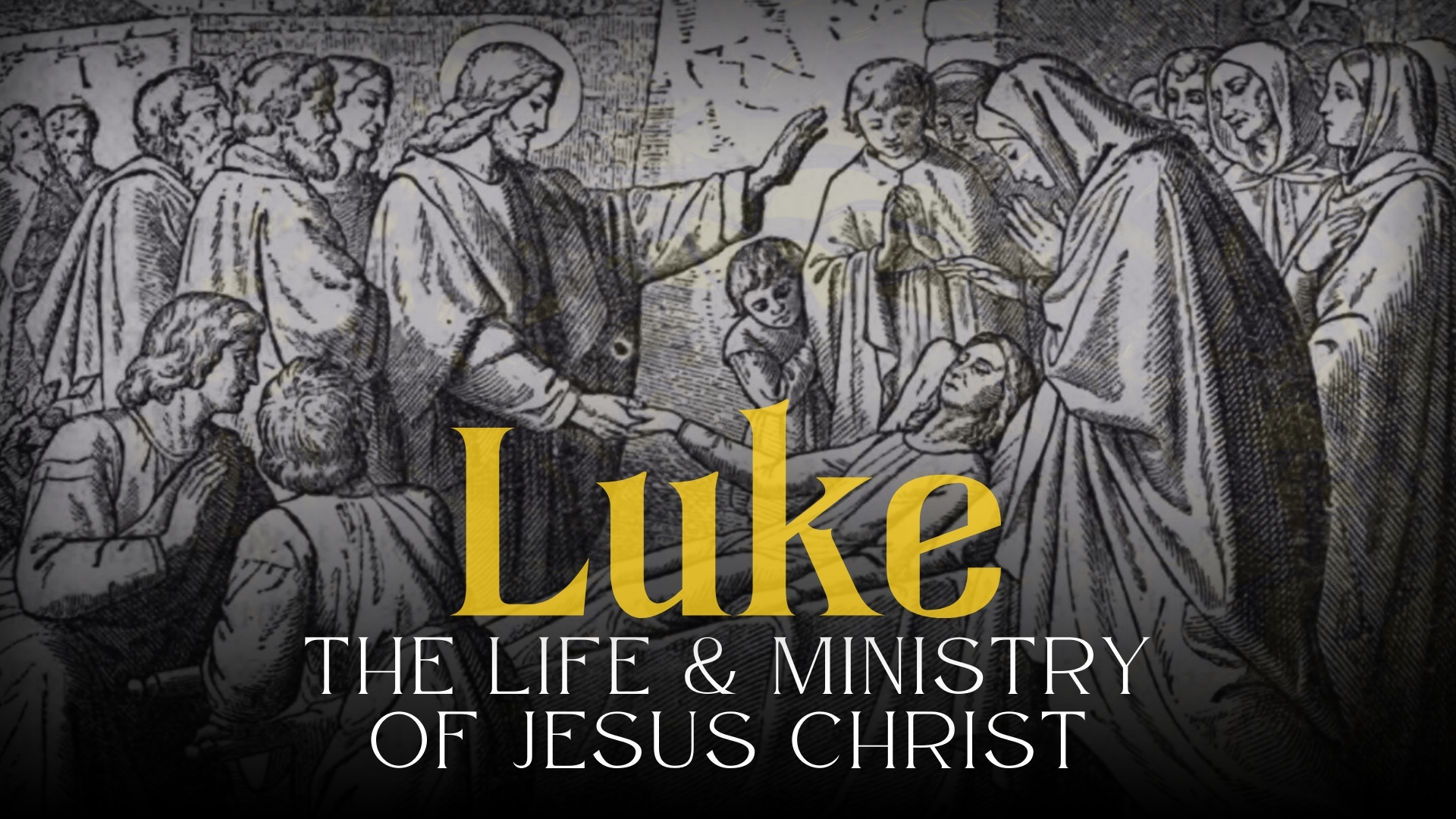
Luke 7:36-8:15
Considering the fruit of authentic faith
- Those who deeply love Jesus
- Those who hold fast to the Word in a good heart and steadfastly endure in bearing fruit
Manuscript:
Good morning, church family! Introduce self + welcome guests
Comments about the delight of having multiple generations represented on the worship team
Dismiss 4th + 5th graders
Ushers + Bibles (Luke 7; page 1027)
I have been looking forward to studying this text with you today! If you haven’t noticed, our sermon title is in the form of a question “Who Really Has Faith and Eternal Life?” It’s meant to grab your attention and invite you to evaluate the answer.
Throughout the Gospel of Luke, we have heard and observed Jesus confronting the status quo of his day. Just last week, Pastor Jack walked us through four ways Jesus’ authority confronts our expectations. He commended the faith of an outsider, interrupted the widow’s grief, responded to the prophet John’s questions as John wrestled with his own expectations of Messiah, and he exposed the fickleness of this generation in their resistance to hearing the truth. Before that, we heard Jesus calling everyone to pay attention and do some introspection. They needed to pay attention to the fruit of their lives and realize that fruit reveals root… They were challenged not only to hear the Word of God, but to obey it! Dig down deep and build your house/faith on the rock/foundation of Jesus. Jesus has been teaching the first Christians (and all who hear) what authentic faith looks like.
It is safe to say Jesus was no people-pleasing preacher. He wasn’t interested in appeasing the masses and catering to the felt needs of men. Through Luke’s recounting we have found Jesus intentionally disrupting and challenging the Jewish people to reconsider their misconceptions. He is trying to wake them up from a spiritual stupor or slumber. They have assumed that they are in God’s favor simply because of their identity as a nation, but they are incorrect!
In our text today, Jesus is going to continue to confront and disrupt this assumption. Yet it’s not simply a confrontation for the people of his day, it is also a head-on confrontation of modern Western teachings about faith. Many in our have been led astray by the teachings of easy-believism. By easy-believism I am speaking of teaching that dramatically lowers the bar of entry into the kingdom of God, typically by so emphasizing God’s free gift of grace that they diminish the reality of a transformative relationship with God. Easy-believism is when someone is told that all they have to do is “pray a prayer” or “come forward to the altar” or “raise your hand if you want to believe in Jesus”, yet are never told that there is a cost to following Christ, that following him requires repentance – turning from sin, dying to yourself, and obeying his Word/commands. While the proponents of this doctrine may have been well-meaning, because salvation is by grace through faith in Christ alone, and they were likely trying to help as many people as possible have the hope of eternal life, I believe they have done incredible damage to entire generations of people as this less than biblical teaching has spread far and wide and deceived many. Rather than teaching the fullness of lifelong, biblical faith, they ended up making it about a specific moment in time response and action.
As we will see today, far from lowering the bar, Jesus’ teaching on entering the kingdom of God raised the bar! He is going to help us know how to enter God’s kingdom by confronting our misconceptions and helping us understand how to have authentic, saving faith and the hope of eternal life. May we have ears to hear, believe, and obey!
With that in mind, let’s turn our attention to the reading of God’s Word for this morning. We’re going to pick back up in Luke 7:36, which is after Jesus had responded to John the Baptist’s questions and addressed the crowds about John. Now we are introduced to a new scene:
Luke 7:36–50 (ESV)
36 One of the Pharisees asked him to eat with him, and he went into the Pharisee’s house and reclined at table. 37 And behold, a woman of the city, who was a sinner, when she learned that he was reclining at table in the Pharisee’s house, brought an alabaster flask of ointment, 38 and standing behind him at his feet, weeping, she began to wet his feet with her tears and wiped them with the hair of her head and kissed his feet and anointed them with the ointment. 39 Now when the Pharisee who had invited him saw this, he said to himself, “If this man were a prophet, he would have known who and what sort of woman this is who is touching him, for she is a sinner.” 40 And Jesus answering said to him, “Simon, I have something to say to you.” And he answered, “Say it, Teacher.”
41 “A certain moneylender had two debtors. One owed five hundred denarii, and the other fifty. 42 When they could not pay, he cancelled the debt of both. Now which of them will love him more?” 43 Simon answered, “The one, I suppose, for whom he cancelled the larger debt.” And he said to him, “You have judged rightly.” 44 Then turning toward the woman he said to Simon, “Do you see this woman? I entered your house; you gave me no water for my feet, but she has wet my feet with her tears and wiped them with her hair. 45 You gave me no kiss, but from the time I came in she has not ceased to kiss my feet. 46 You did not anoint my head with oil, but she has anointed my feet with ointment. 47 Therefore I tell you, her sins, which are many, are forgiven—for she loved much. But he who is forgiven little, loves little.” 48 And he said to her, “Your sins are forgiven.” 49 Then those who were at table with him began to say among themselves, “Who is this, who even forgives sins?” 50 And he said to the woman, “Your faith has saved you; go in peace.”
From preaching to great crowds to private audiences around the table with Pharisees, Jesus is constantly and consistently proclaiming the message of God’s kingdom. He is willing to associate with a wide variety of people, tax collectors and sinners or religious hypocrites, in order to share the hope of salvation through faith in him. You might say he is an equal opportunity evangelist.
In this scene, Jesus has been invited to the home of a Pharisee named Simon. He agrees and we find him reclining at table with the Pharisee and his guests. However, not long into the meal, an interruption takes place! A woman of the city, whom we are told “was a sinner”, enters the room and begins to make quite a scene as she weeps profusely and washes Jesus’ feet with her tears. Not to mention she lets down her hair, wipes his feet with it, then kisses and pours expensive ointment over them.
I can’t say I’ve ever seen or heard of anything quite like this at a dinner I’ve attended! But let me explain some things culturally that might help us understand what is going on. It is highly likely that Jesus was joining Simon for a special meal that would have been open to the public for observation. This was not uncommon in their days. The meal could have taken place in a setting in Simon’s house, such as a courtyard, that was both visible to the public eye and even accessible for uninvited guests to linger around the courtyard and listen to the conversation. Again, this is not how every meal went, but it is how some were conducted. It was a social setting where many could listen and learn.
Even so, as we pick up on in this recounting, the presence of this particular woman was eye-popping to Simon and his friends. She was “a sinner”. And while WE are not told exactly what she was known for, it was a matter of public knowledge for them. Some speculate that it might have been adultery or prostitution for it to be so well known, but the text does not tell us nor does it identify the woman.
What we do know is Simon’s internal response of doubting Jesus’ role as a prophet as well as Jesus’ spoken response to him! Did you pick up on that detail? Simon said to himself… And Jesus answered him! Once again Jesus reveals that he knows the thoughts and desires of men. This happened in a very similar way back in Luke 5 when the Pharisees grumbled internally when Jesus forgave the paralytic.
And what did Jesus say to Simon? He gave him a scenario to consider. Who will appreciate and love the forgiving moneylender more? The answer of course is the one with the greater debt. Each of us understands this scenario! The more you owe, the more thankful and excited you will be if it were suddenly forgiven/wiped clean!
But then Jesus introduces the Gospel turn to this scenario… He points out the stark contrast between how this woman has treated him to how Simon has treated him. Simon, the religious leader, had neglected to show Jesus both social courtesies and acts of devotion/love. Whereas this woman, the publicly known sinner, used her tears to wet his feet, her own hair to wipe them clean, and did not cease to kiss his feet and anoint them with ointment. These are signs of respect and devotion/love. Following these acts, Jesus speaks to her twice, once to reassure her of the forgiveness of her sins and a second time to confirm that her faith has saved her and that she lives at peace with God.
Why are there such stark differences in their treatment of Jesus? It goes back to the scenario he shared. This woman had recognized the incredible debt her sin had incurred before a Holy God and had come to Jesus in faith. Whether that was in an earlier setting or right now, we are not told. What we do know, is that she was responding to Jesus from a posture of deep love and worship, knowing that he had forgiven her of SO MUCH. Whereas with Simon the Pharisee, he had not recognized his sin before God and therefore did not see his need for forgiveness. This led him to treat Jesus poorly, lacking love and without worship. Of the two, Simon is the one to be pitied, though she “was” a sinner, now she is forgiven and has peace with God! But Simon is spiritually blind and still dead in sin, an enemy of God.
This is a startling and confrontational interaction, if you grasp what is happening. Once again, Jesus reveals that he has come for the penitent sinner not the self-righteous person. He is forcing everyone to come to grips with the truth about faith that leads to salvation.
As we seek to answer the question, Who Really Has Faith and Eternal Life? we are also:
Considering the fruit of authentic faith
And we find our first answer to the question in verses 36-50… Who Really Has Faith and Eternal Life?
- Those who deeply love Jesus
The principle at work here is – how you live reveals the state of your heart and faith, whether it is authentic or false. Or, as said in previous weeks, fruit reveals root. As we’ve seen from this woman’s actions, someone who recognizes the depth of their sinfulness and that they have been forgiven a great debt, loves much!
Now when we talk about love, we are not speaking of some mushy-gushy feeling that you have when you look at another person. Love is more than a feeling or emotion. Biblical love is a choice. It requires action. It is intentional. It requires sacrifice for the good of others. God and Jesus Christ have shown us what real love is. God loved us so much that He sent His son to redeem us. Jesus loved us so much that He gave everything up for us. Action and intention!
This woman came to a public venue and intentionally worshiped Jesus before the eyes of those present. She broke open an ointment of some value to pour over his feet. She was greatly moved by her deep love for Jesus as her Savior!
Now I realize that not everyone here may understand what I mean when I talk about the “depth of our sinfulness”. Perhaps no one has ever explained the problem of sin to you. If you did not know, sin literally means to miss the mark of God’s holiness. Sin is rebellion against and disobedience to God. We find humanity’s first sin in the Garden of Eden when Adam and Eve defied God’s command not to eat of the tree of the knowledge of good and evil. And ever since that day, humanity has been enslaved to sin. If you’ve never read the book of Romans, Paul does such an excellent job explaining this enslavement that we all find ourselves in before faith in Christ. The Bible’s message is not that humans are good people who just need a little help in order to make it to heaven, but rather that we are dead in sin and an enemy of God. Perhaps the most succinct explanation of this is in the letter to the Ephesians:
Ephesians 2:1–3 (ESV)
And you were dead in the trespasses and sins 2 in which you once walked, following the course of this world, following the prince of the power of the air, the spirit that is now at work in the sons of disobedience— 3 among whom we all once lived in the passions of our flesh, carrying out the desires of the flesh and the mind, and were by nature children of wrath, like the rest of mankind.
Everyone has an enormous sin-debt that we cannot pay. We have rebelled against the highest possible authority, God, and he is just to condemn us in our rebellion. Romans 6:23 tells us that wages of sin is death.
When you finally understand that this is true for you; it is an awful realization! We might cry out alongside the Apostle Paul:
Romans 7:24 (ESV)
24 Wretched man that I am! Who will deliver me from this body of death?
I am a sinner who cannot save myself! I am heading to judgment and afterwards, hell. Who will deliver me since I cannot deliver myself? Paul gives the answer in the very next verse:
Romans 7:25a (ESV)
Thanks be to God through Jesus Christ our Lord! …
Jesus Christ is the Son of God who was sent to save sinners from the penalty of our sin! That is what Jesus has been pointing out throughout his life and ministry. This is what Luke has been calling attention to in his Gospel account. This is what Paul highlights as well in Romans 5:8:
Romans 5:8 (ESV)
8 but God shows his love for us in that while we were still sinners, Christ died for us.
The beauty of God’s grand plan of redemption is that he always planned to send His Son to rescue and redeem sinners like us! He would not sit idly by while His Creation rebelled against Him and incurred a massive sin-debt that resulted in our condemnation and judgment. No, he acted in love to send His Son to pay the price for our redemption. The debt must be paid, there is no getting around that, but Jesus was willing to pay it on our behalf. The sinless Son of God willingly went to the Cross and drank the cup of God’s wrath dry for me, for the woman in Luke 7, and for you, if your faith is in him! Paul spells out this redemption plan in Romans 3:
Romans 3:21–26 (ESV)
21 But now the righteousness of God has been manifested apart from the law, although the Law and the Prophets bear witness to it— 22 the righteousness of God through faith in Jesus Christ for all who believe. For there is no distinction: 23 for all have sinned and fall short of the glory of God, 24 and are justified by his grace as a gift, through the redemption that is in Christ Jesus, 25 whom God put forward as a propitiation by his blood, to be received by faith.
This was to show God’s righteousness, because in his divine forbearance he had passed over former sins. 26 It was to show his righteousness at the present time, so that he might be just and the justifier of the one who has faith in Jesus.
This passage reveals that it was always God’s plan to send His Son to save us. We have all sinned and have an incredible sin-debt that we cannot repay. But Jesus, the Son of God, is able and willing to ransom us! He has provided the way of salvation from God’s wrath through faith in him. One who trusts in Jesus is declared righteous… forgiven… at peace with God!
When someone realizes the depth of their sinfulness and subsequently receives the gift of salvation and forgiveness through faith in Jesus, then they are transformed! You realize how great a debt has been forgiven and now you deeply love Jesus! This is evidence of one who really has faith and eternal life. (Main Slide)
Contrast that with someone who does not grasp the magnitude of their sinfulness, does not recognize their need for forgiveness, and therefore loves little. This is the posture of Simon the Pharisee. He is deceived into thinking he’s good with God because of his position in the religious elite of Judaism. He knows the law, likely even tries to keep the law and teach it to others… yet he does not recognize that he is dead in sin, a rebel before a holy God. So, he is not transformed or driven to love Jesus and worship him.
Simon, the religious hypocrite, is not alone in this camp. Alongside of him are those who think – “I’m a good person. Surely my good outweighs my bad.” Or the religious pluralists who say, “There are many ways to God. I’ll pick one that doesn’t require me to confess my sin and rebellion…” Not to mention the many relativists who profess, “There is no such thing as absolute truth. You have your way of belief and I have mine…”
The persons who inhabit these categories all fail to recognize their sin problem and turn to the only solution for it, faith in Jesus Christ for the forgiveness of sins. Therefore, they have little love for Jesus. He is just one of many good teachers throughout history. He had some good, moral teachings to share, but he was not the Son of God nor the exclusive way to eternal life. And, sadly, most of our world’s population hold these types of views. I know people in my own family and spheres of influence in these categories, and I am sure you do too.
The answer for such spiritual ignorance and apathy is to plead the beauty of the forgiveness of Christ! How incredible is it that the sinless Son of God would take on flesh and dwell amongst us, willingly enduring the scorn and shame of crucifixion and, ultimately, the wrath of God for OUR SINS!? This is what Jesus was heading to do when the formerly “sinful” woman came to him. She believed in him. She turned from her sin and received forgiveness and salvation! She had the promise of peace with God. What an incredible promise and hope! These can be yours through faith in Christ! Why would anyone want to stand with Simon as an enemy of God when you could stand with this woman as one forgiven by Him instead?
May we be deeply transformed by the forgiveness of Jesus Christ such that we live a life of deep love for him. If you have really believed and received forgiveness, then live like it! Meditate often on these rich realities and allow them to change you. Allow them to cultivate a deep love for Jesus within you that overflows in the way you speak to others about him, in the way you conduct yourselves as a servant for him. Those who have been forgiven much, love much. Would the people in your life have reason to suspect that you’ve been forgiven much because of the way you love? *pause*
We see further examples of those who loved much in the very next section. Let me read it for you:
Luke 8:1–3 (ESV)
Soon afterward he went on through cities and villages, proclaiming and bringing the good news of the kingdom of God. And the twelve were with him, 2 and also some women who had been healed of evil spirits and infirmities: Mary, called Magdalene, from whom seven demons had gone out, 3 and Joanna, the wife of Chuza, Herod’s household manager, and Susanna, and many others, who provided for them out of their means.
Jesus has continued to move forward with his ministry and mission – proclaiming and bringing the good news of the kingdom of God. Remember he had come to call people to repentance – to turn from their sin and follow him. And while he was on this mission, there were some instrumental women sacrificially supporting his ministry! While we are not told a lot about these ladies, what we do know is that they counted the cost of following him. They were using their resources to meet the needs of Jesus and his disciples. What incredible servants of the Lord! They loved much because they had been forgiven much.
Now let’s turn our attention to another instance of a great crowd gathering around Jesus to hear his teaching. This is an important parable, please listen closely:
Luke 8:4–15 (ESV)
4 And when a great crowd was gathering and people from town after town came to him, he said in a parable, 5 “A sower went out to sow his seed. And as he sowed, some fell along the path and was trampled underfoot, and the birds of the air devoured it. 6 And some fell on the rock, and as it grew up, it withered away, because it had no moisture. 7 And some fell among thorns, and the thorns grew up with it and choked it. 8 And some fell into good soil and grew and yielded a hundredfold.” As he said these things, he called out, “He who has ears to hear, let him hear.”
9 And when his disciples asked him what this parable meant, 10 he said, “To you it has been given to know the secrets of the kingdom of God, but for others they are in parables, so that ‘seeing they may not see, and hearing they may not understand.’ 11 Now the parable is this: The seed is the word of God. 12 The ones along the path are those who have heard; then the devil comes and takes away the word from their hearts, so that they may not believe and be saved. 13 And the ones on the rock are those who, when they hear the word, receive it with joy. But these have no root; they believe for a while, and in time of testing fall away. 14 And as for what fell among the thorns, they are those who hear, but as they go on their way they are choked by the cares and riches and pleasures of life, and their fruit does not mature. 15 As for that in the good soil, they are those who, hearing the word, hold it fast in an honest and good heart, and bear fruit with patience.
In this teaching, Jesus challenges us to evaluate who really has faith and eternal life! There are four soils presented, each representing a category of responders to the Word of God. And yet, out of the four soils, only the fourth has authentic faith that leads to eternal life. The other three, for a variety of reasons, fall short of authentic faith and do not inherit eternal life.
This is shocking teaching! It ought to cause each one of us to ask, “Which soil am I? How do I respond to the Word of God?” This is the intended response. To provoke and reveal whether you are the kind of soil that bears fruit of faith and eternal life.
So, stating it again, our question is Who Really Has Faith and Eternal Life? And in 8:4-15, we find another answer:
- Those who hold fast to the Word in a good heart and steadfastly endure in bearing fruit
Jesus taught publicly to great crowds and in Pharisee’s homes around the dinner table. He interacted with sinners and the self-righteous. And even though many heard the words he said, they did not all respond in the same manner!
Now, there is a reason Jesus taught in parables. He intended to weed out those who were not serious about following him. It takes effort to understand a parable. Someone who truly wants to know and follow Jesus will put in the time and effort to seek understanding. We have the benefit of Jesus’ explanation to the disciples. So, we get a bit of a shortcut to understanding. Yet even still, how will you respond to Jesus’ teaching?
Jesus’ parable of the soils reveals that it is those who, after hearing, hold fast to the Word in a good heart and steadfastly endure in bearing fruit who really have faith and eternal life! So not Judas, but Peter. Not soils 1-3, but soil 4. Let’s talk through this…
In verse 11, Jesus tells us that the seed being sown is the Word of God. Then he explains what each of the four soils represents.
- Soil #1 – Those who hear but immediately undergo spiritual opposition resulting in unbelief.
This is a reminder that there is a very real enemy of God and of each of us – the devil. He hates God and he will stop at nothing to prevent us from believing in God and worshiping Him. Recall how Paul spoke about this opposition earlier from Ephesians 2:
Ephesians 2:1–3 (ESV)
And you were dead in the trespasses and sins 2 in which you once walked, following the course of this world, following the prince of the power of the air, the spirit that is now at work in the sons of disobedience— 3 among whom we all once lived in the passions of our flesh, carrying out the desires of the flesh and the mind, and were by nature children of wrath, like the rest of mankind.
Many in this world never leave the path of the prince of darkness. They walk beside him in wickedness and engage in wicked desires/acts/speech that promote ungodly ways. It is a sad reality that ought to sober each one of us. Such persons, when they hear the Word of God, respond in disdain or apathy or outright hostility. They want nothing to do with the truth because they are influenced heavily by their sin nature and the enemy.
- Soil #2 – Those who hear and respond with immediate joy, but fall away in a time of testing/trial
Soil #2 is also saddening. Many of us likely know people who seem, at first glance, to have a positive response to the Word of God. They appear to believe and have great joy in what they are taking in. However, as time goes on and life gets hard again, they fall away. They lose the joy that once characterized them. They have no desire to pursue God any longer. They give into despair or the temptations of the flesh/world, deciding that it is not worth it to follow Christ. They go back to their old ways of sin and darkness, forsaking the changes they had made at first.
From our perspective, this can be quite confusing. I thought they were a Christian!? Not so, as evidenced by their lack of continuing in the faith. Their lack of holding fast and steadfastly bearing fruit reveals they have no root in authentic faith in Christ. They did not dig deep and build upon the rock. Their supposed faith was superficial and did not transform them from the heart.
To put it another way, tears or rejoicing in response to God’s Word are no reliable indicator for saving faith. As Pastor J.C. Ryle said, “Nothing should content us but a deep, humbling, self-mortifying work of the Holy Ghost, and a heart-union with Christ.” The outcome of falling away is heartbreaking, especially since with Soils #2 and #3 we have no indicator of how long it may be before this falling away occurs.
The longer I have been in pastoral ministry, studying the Word and shepherding souls, the more convinced I am that there are people who go for years appearing to have faith, yet are not truly saved. Before I elaborate on that further, let me introduce soil #3.
- Soil #3 – Those who hear but, as they move through life, ultimately choose the ways of the world over the ways of the Lord
Both Soils #2 and #3 are initially receptive to the Word of God, but as life progresses, something happens that reveals where their ultimate allegiance lies. For soil #2 it is a trial or test, but for soil #3 it is continued exposure to the values and cares of this world. Their fruit does not mature into saving faith because it is choked out by the anxieties of life and the desire to be wealthy and not miss out on “all the fun” that worldly people have.
All of us are in danger from the cares and riches and pleasures of life consuming us. It would be impossible to count the number of things we might be anxious about in this life. One could easily meditate on all the reasons to be anxious and find their fruit choked out before it matures to saving faith. Who doesn’t want to enjoy a life of luxury and pleasure? That desire is the undoing of many. Few are willing to count the cost of following Christ and deny the pursuit of stacking up treasures and pleasures in this life. We live in a day and age that demands immediate gratification and dopamine hits. Many of you have been trained by your smartphone to look at it and pick it up and interact with it every time it dings/buzzes with the latest notification. How many of us realize that this is just one way faith may be choked out by the cares and pleasures of life?
The news cycle, social media, apps, games, TV shows and so much more are all designed to keep you engaged. Keep you focused on them rather than on Christ and His Word. The devil is not stupid. He doesn’t need to get you to publicly deny Christ, just be too busy to consistently draw near to him. Too distracted to realize your heart never really was devoted to him and it grows colder by the day. Too content with offering him mere lip service once in your life but never having a life transformed by the Spirit or going to war daily with the flesh in the pursuit of holiness. *pause*
I honestly struggled to know how to preach this sermon because it is TOO important to mess up! I am personally convinced that far too many of us think that we are soil #4 without doing the due diligence to ensure we are not soils 1-3. Let me put it to you bluntly.
- Just because you made a profession of faith once in your life does not necessarily mean you are soil #4
- Just because you are a member of this church (or another) does not necessarily mean you are soil #4
- Just because you were baptized and take the Lord’s Table does not necessarily mean you are soil #4
Let me try to explain…
- Soil #4 – Those who hold fast to the Word in a good heart and steadfastly endure in bearing fruit
Soil 4 is known for their perseverance in the faith. Soil 4 hears the Word and holds fast to it. It changes them. It transforms their lives. They have a deep love for the Lord, and it shows in their steadfast endurance in bearing good fruit of faith. For the rest of their lives. They persevere through many trials and tribulations. They consistently go to war against temptation and sin. They are growing and maturing each year. They are marked by forward progress in their faith. And they persist in this until the day they die or Jesus returns.
Soil 4 isn’t perfect. Peter is a great example of Soil 4. Soil 4 still struggles with temptation and sin, but they don’t give up or consistently give in. They are repentant! They genuinely want to grow and are open to people coming alongside them to help them in that pursuit. They hunger and thirst for righteousness. They want to know and apply God’s Word more and more. They lament their own sin and do not make peace with it. They learn to be comfortable being at odds with the secular culture rather than adapting to it. They are willing to be aliens and strangers in this world if it means they are citizens of heaven with God. They don’t ask, “Do I have to obey?” but rather pray, “Lord, help me to obey!”
Does this describe you? Are you soil #4? Each of us needs to spend time reflecting on these matters as they are of the utmost importance!
I know that these are not easy teachings, but they are the teachings of Jesus Christ. He is calling men and women out of darkness into his marvelous light. He rescues and redeems us from slavery to sin into slavery to righteousness. He is committed to his people’s sanctification (holiness). He is steadfastly loving and long-suffering with us in this process of maturing in our faith. And he will bring to completion what he has begun! What a wonderful transformation! When God calls a man or woman to himself, he does not lose them.
I thank God for his steadfast love and faithfulness towards me, even when I am frail and weak towards him! He has carried me and sustained me through much in this life. I have often felt too weak to carry on. Too burdened by the weight of sin or the cares of this world to continue. But by His Word and His Spirit and with the help of His people, the church, I have persevered. I am so thankful for each of you. I am even more thankful for the Lord and his extravagant mercy and grace. In the words of Matt Papa and Matt Boswell:
Praise the Lord, His mercy is more
Stronger than darkness, new every morn
Our sins they are many, His mercy is more
Or in the words of John Newton in the hymn Amazing Grace:
Through many dangers, toils and snares
I have already come;
‘Tis Grace that brought me safe thus far
and Grace will lead me home.
Thank you, Jesus, for your mercy and grace that are made available to me (and you) each and every day! *pause*
Please do not move on quickly from these teachings. Take time to study them carefully and consider their application for your own life this week. If you find that you are concerned about your standing before God, reach out for help! Whether that is to our pastor team or your small group or a trusted Christian friend, but do not continue struggling on your own. Faith and eternal life with our Creator is too important to miss out on!
I would love to talk with you further after the service if you have questions about this sermon today.
Let’s pray.
Pray