
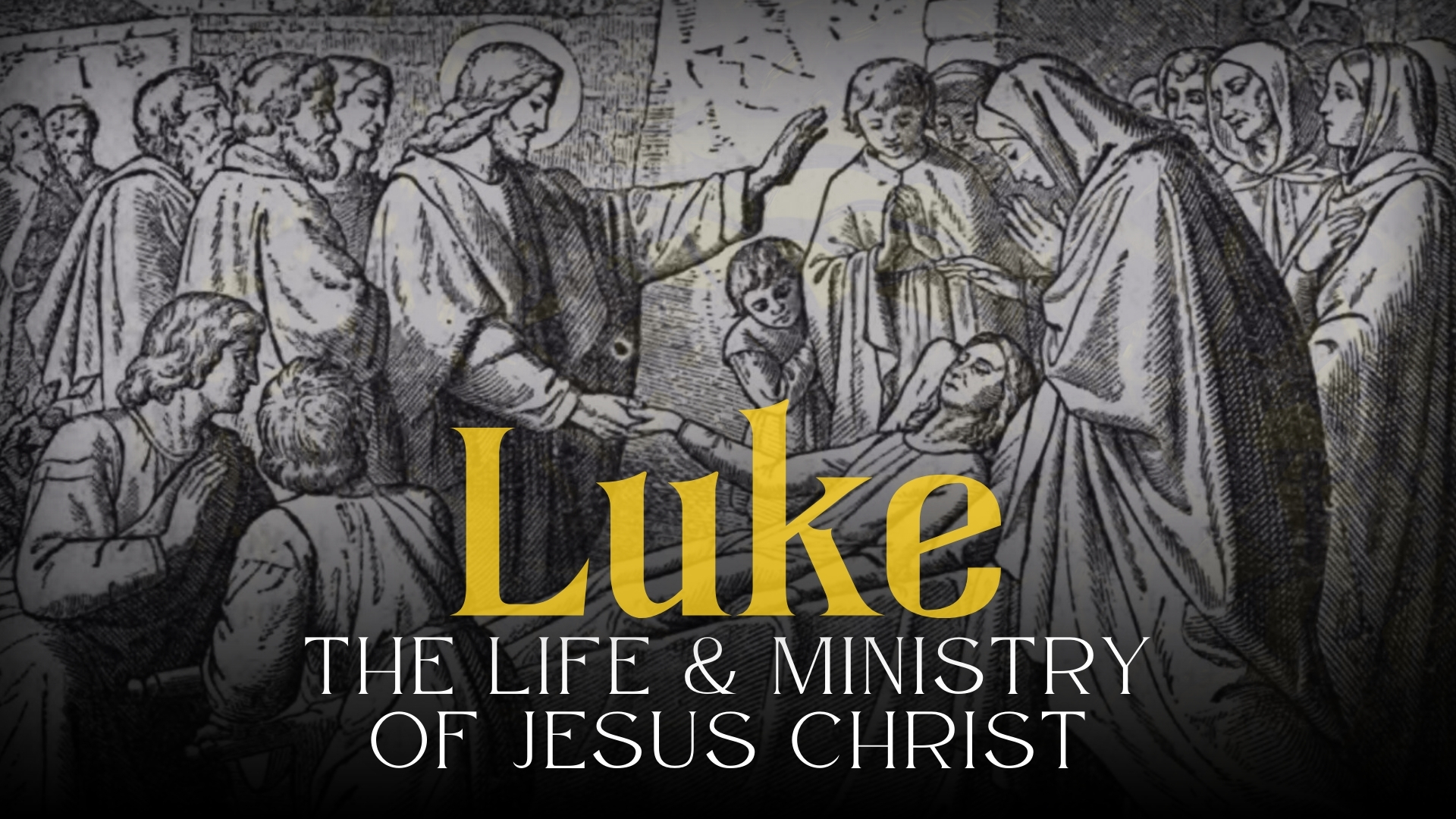
Jesus’ Compassionate Authority • 05.10.26

Jesus’ Compassionate Authority
Luke 8:40-9:6
Delighting in Jesus’ power to do good
- Jesus responds to a woman’s faith with salvation and healing
- Jesus encourages faith over fear as he resurrects Jairus’ daughter
- Jesus delegates his authority to his disciples to accomplish the mission
Manuscript:
Good morning, church family! Introduce self + welcome guests
Dismiss 4th + 5th graders
Ushers + Bibles (Luke 8; page 1029)
Over the last two months, since we first studied Luke chapter 5, we have witnessed the authority and power of Jesus week after week. Luke has been thorough in recording demonstrations of Jesus’ authority over creation, illnesses, demons, sin, the law, and death. If you were with us over the last two weeks, you know that Jesus’ teachings have also been confrontational. Through his rebuke of Simon the Pharisee, the parable of the four soils, and his interactions with the crowds and disciples, Jesus has been challenging everyone to evaluate their response to him. Some have authentic faith while many others do not.
Today, as we return to the text and witness Jesus return to Galilee after his excursion to the Gerasenes, we will yet again witness Jesus’ authority on display. Luke is not finished with this theme! However, in our text today, Jesus’ displays of authority will be less about confrontation and more about compassion. I hope this will be a helpful reminder to each of us that Jesus’ authority is always for our good. There are times when he uses it to confront us in our sin and call us to repentance and there are other times when he uses it to meet us in our weakness and restore us to wholeness in him. Both are necessary. Both are for our good and God’s glory!
So, as we study the text today, I hope that you walk away encouraged and delighting in Jesus’ power to do good. It is so sweet to be reminded that we have a confrontational yet compassionate Savior and Lord! And He is perfect in all his ways, knowing when each is needed for our good and God’s glory. With that in mind, let’s pick back up in Luke 8:40.
Luke 8:40–48 (ESV)
40 Now when Jesus returned, the crowd welcomed him, for they were all waiting for him. 41 And there came a man named Jairus, who was a ruler of the synagogue. And falling at Jesus’ feet, he implored him to come to his house, 42 for he had an only daughter, about twelve years of age, and she was dying.
As Jesus went, the people pressed around him. 43 And there was a woman who had had a discharge of blood for twelve years, and though she had spent all her living on physicians, she could not be healed by anyone. 44 She came up behind him and touched the fringe of his garment, and immediately her discharge of blood ceased. 45 And Jesus said, “Who was it that touched me?” When all denied it, Peter said, “Master, the crowds surround you and are pressing in on you!” 46 But Jesus said, “Someone touched me, for I perceive that power has gone out from me.” 47 And when the woman saw that she was not hidden, she came trembling, and falling down before him declared in the presence of all the people why she had touched him, and how she had been immediately healed. 48 And he said to her, “Daughter, your faith has made you well; go in peace.”
Jesus’ return to Galilee was met with great anticipation! Unlike the fearful townsfolk of the Gerasenes, the crowd here welcomes him and has been looking forward to his return. Why? Because of the great miracles he had done and the authoritative teaching he proclaimed. The people had taken notice of Jesus and were very interested in figuring out who he was. Many are wrestling with the identity and authority of Jesus! “Who is this?” continues to be a common question on the hearts and minds of the people.
Now, the way Luke recounts this, it sounds like as soon as Jesus’ feet hit dry land again, he was in demand! And Luke draws our attention to one particular man who sought Jesus out – Jairus, who we are told was a ruler of the synagogue. This is not your average townsperson; this is a man who has a position of importance in the local synagogue. The ruler of the synagogue was responsible for arranging their Sabbath worship services, selecting who did the readings, led the prayers, and taught those gathered in the congregation. He would have been a man of considerable standing in their community. Yet how does Luke portray his interaction with Jesus?
He fell at Jesus’ feet and implored him to come to his house because his only child, his 12-year-old daughter was dying. This man of great standing and influence in Judaism abases himself before Jesus and begs him for help!
What an incredibly relatable scenario, at least for me! Any good father would do the same, going to whatever lengths are necessary to help your dying child. Now is not the time for posturing and pride but for humble crying out for help! And, in his time of desperate need, to whom did he go? Who did he believe could help him? Jesus, the One who has healed many and, even, raised the dead.
This scene is full of emotion and urgency. We immediately feel for the father and his family. And so did Jesus! Verse 42 tells us that Jesus’ immediate response was to head to Jairus’ house. He had compassion for this man and his daughter. He was moved to action to meet pressing needs.
Yet as he is going, the people are pressing in around him! The word “pressed” is the same word used to describe the thorns choking out the third soil in the earlier parable. It communicates that Jesus was being swarmed by the crowd; they’re getting in the way of his urgent mission to help Jairus!
It is in the midst of this jostling, suffocating crowd that is clogging the streets to Jairus’ house that another interruption takes place. A woman reaches out and touches the fringe of Jesus’ garment. But this is not just any woman from the town, this woman has had an uncurable bleeding disease for the past 12 years and has not been able to be helped by any physicians during that time! Furthermore, she had spent all her money seeking help. Apparently being buried by medical expenses is not a uniquely 21st century experience!
In all seriousness, this situation is also quite desperate. Luke is telling us that she had nothing left to live on. She had exhausted her means in her search for a solution! And, on top of the physical ailment, the religious and social implications of her condition were just as hard. The law that the Jews lived by specifically spoke to this kind of scenario in Leviticus 15. Bodily discharges made you ceremonially unclean. This meant that this woman was perpetually unclean, forbidden from participating in temple or synagogue worship, socially isolated because if she touched anyone else, they too would become unclean. Her life had been completely dominated by this disease for the last 12 years and now she was out of finances and options. And, in her time of desperate need, to whom did she go? Who did she believe could help her? Jesus.
Consider what we’re witnessing… It does not matter whether you’re from the upper class or a destitute commoner, from the religious elite or the religiously ostracized, when life falls apart and you are at your wits’ end and without hope, where can you turn? Where should you turn? To Jesus, the One with all authority and power, who delights to do good to those who come to him in faith!
As we continue to study these two scenarios, our aim is…
Delighting in Jesus’ power to do good
And this truly should not be hard for us to do! Again, consider what we are witnessing… Jesus, the Savior and Sustainer of the world, who came to proclaim the message of the kingdom and accomplish the divine rescue plan was eminently interruptible! He was ready to meet the needs of the people he had come to save. Their troubles and turmoil, trials and tribulation, were not too insignificant for him! And neither are ours! He cares deeply. He is a compassionate Savior. He provides help and hope in time of need. He did it back then and he continues to do so today. *pause*
Since the woman interrupts Jesus’ journey to Jairus’ house, and thereby comes into focus first, we’re going to start with her. Her story is revealed in verses 43-48. We’ve already spent some time considering her situation and suffering, so let’s turn our attention to Jesus’ power to do good. In this scenario…
- Jesus responds to a woman’s faith with salvation and healing
Look again at verse 44 – She came up behind him and touched the fringe of his garment, and immediately her discharge of blood ceased. How long had she been suffering from this illness? 12 years! How much had she spent on physicians, seeking help? All her living! Who had been able to heal her? No one… Until she came to Jesus!
How long did it take Jesus to heal her? Immediately!!! With one faith-filled touch, she was healed. Now, perhaps you’re thinking, “Wait a minute, where does it say anything about her faith in this interaction?!” Hold onto that question as we look at Jesus’ response. He asks a question aloud to the crowd, “Who was it that touched me?”
Now, remind me, where was Jesus right now? In town, surrounded by people, who were pressing in on him! Who was touching him?! Many people were likely bumping into him and jostling him as they crowded through the streets. That’s Peter’s point! “What does Jesus mean?! There are tons of people here. What an obvious answer, Jesus!”
That’s not what Jesus meant though, is it? Jesus was speaking about a specific kind of touch. A touch that was intentional and informed by faith. A touch that was seeking help and healing in time of need from One who had the power and authority to provide it.
When Jesus answers, “Someone touched me, for I perceive that power has gone out from me.” He is not telling us that he is like some kind of battery that people merely plug into to receive power. Rather he is saying that someone has approached him by faith and that he has answered their inquiry via touch with the power to heal. Even though the woman thought she was discrete and unnoticed in her approach, Jesus was aware of her need and faith the whole time! And he had compassion for her to heal her. He willingly used his power to do good to the woman!
And this good is not limited to physical healing. Something that I did not realize until I studied this passage further is that by calling her out publicly, Jesus was providing the opportunity for her to be restored in the eyes of her community. Remember, they would have known this woman as the unclean one. She was to be avoided and could not worship with them. But not any longer! She now testifies that, by Jesus’ authority and power, she has been made clean! And how does Jesus respond? Does he get angry that this unclean woman touched him and made him unclean? Not at all. Rather than Jesus becoming unclean, the woman becomes clean. He said to her, “Daughter, your faith has made you well; go in peace.”
Jesus’ response is kind and compassionate. He uses familial language to address her, revealing that she is now part of God’s family. He speaks of her faith and points to it as the reason for her healing and salvation. She believed and Jesus answered. And he closes with the wonderful command and promise that she is to go in peace with God. This is a public restoration so that she could enjoy the fellowship of community and corporate worship of God again. This language is the same as what he declared to the formerly sinful woman back at Simon’s dinner in Luke 7:50. Jesus’ compassionate authority is on display!
This interaction invites you to consider where you turn in times of suffering. Perhaps you’ve endured an extended season of suffering, even a medical trial for many years, like this woman! Are you still coming to Jesus in faith? Are you trusting him, no matter the outcome? This is not a message to claim that if you only have enough faith then you will be healed. The Scriptures do not teach that! But they do teach that if you come to Christ in faith, your greatest need will be met – you will be saved from God’s wrath and have the hope of eternal life! You will be a son or daughter of God who has peace with their Heavenly Father. These precious treasures are worth far more than anything else he could give us! Do you believe that? Are you thankful for salvation? Are you cultivating an appreciation that there is no wrath left for you, if your faith is in Jesus? These are wonderful realities! And perhaps God will choose to heal you. That still happens to this day. So come in faith, yet hold your desires openly rather than tight-fisted. Do not demand God to do things your way. You do not know what is best. He does. And he uses all kinds of circumstances to refine our faith and to prepare us for heaven.
Each of us ought to delight in Jesus’ power to do good to us. We have seen it on display with this woman but now let’s see it on display with Jairus and his family. Let’s return to the text where we left off in verse 49:
Luke 8:49-56 (ESV)
49 While he was still speaking, someone from the ruler’s house came and said, “Your daughter is dead; do not trouble the Teacher any more.” 50 But Jesus on hearing this answered him, “Do not fear; only believe, and she will be well.” 51 And when he came to the house, he allowed no one to enter with him, except Peter and John and James, and the father and mother of the child. 52 And all were weeping and mourning for her, but he said, “Do not weep, for she is not dead but sleeping.” 53 And they laughed at him, knowing that she was dead. 54 But taking her by the hand he called, saying, “Child, arise.” 55 And her spirit returned, and she got up at once. And he directed that something should be given her to eat. 56 And her parents were amazed, but he charged them to tell no one what had happened.
The situation, which began with Jairus falling at Jesus’ feet and imploring him to come help his sick daughter took a significant turn for the worse! While Jesus was attending to the needs of the woman, Jairus’ daughter died. As soon as you read that, your stomach drops, doesn’t it? Oh no! How could this be? Even Jairus’ household had lost hope. “Do not trouble the Teacher any more.” That was their counsel. “Leave Jesus alone, it’s too late…”
But what did Jesus say? “Do not fear; only believe, and she will be well.” An opportunity is presented to Jairus. Which will you choose – the path of fear or of faith?
This interaction provides our second opportunity to delight in Jesus’ power to do good as…
- Jesus encourages faith over fear as he resurrects Jairus’ daughter
Jesus continues to demonstrate his compassion by leading Jairus, a ruler of the synagogue, to trust in him for his daughter’s physical salvation. The language is again intentional. The phrase “she will be well” is from the Greek root word sozo which speaks of salvation and deliverance. Jesus is inviting Jairus to evaluate where he believes true hope and salvation is found, especially in light of his daughter’s death.
Death is a jarring experience for everyone. It is an intruder that interrupts all our lives at some or many points along life’s journey. It is a reminder that all is not as it should be. We were created to walk with God and enjoy his presence without fear, without sin, and without the sting of death. And yet, even in death God can work for our good and his glory… Death becomes a crucible to reveal and refine our faith (or reveal the lack thereof). How will Jairus respond to Jesus now that his precious little girl is dead? Will he believe? Will he trust Jesus? Or will he embrace the fear of unbelief and lose all hope?
Many of you can relate to Jairus at this point. You’ve tasted and seen firsthand the sting of death. A child. A parent. A spouse. A friend or extended family member. How did you respond? How did God work in you through that defining moment and the season that followed? Did you draw nearer to him in faith? Or did you allow it to become a wedge that drove you further away from him in fear and distrust?
These are real life realities that we must wrestle through. Jesus is encouraging Jairus that, in the face of death, he must have faith. Faith is the necessary and appropriate response! Nothing else mattered.
And consider how Jesus demonstrated his power to do good to Jairus. He continued his journey to the house, he protected the privacy of the family by not allowing a large crowd to enter in, and he commanded them to stop weeping because she was not dead, only sleeping. Of course, as we read, the crowd just laughed at him! They believed they knew more than he did. They knew she was dead. But they didn’t know Jesus’ compassionate authority, did they?
With the small audience of her parents and his three closest disciples, Jesus takes this little girl by the hand and calls out to her, saying, “Child, arise.” Two words. The same words she likely heard each morning from her mother to start a new day. But when they are uttered by One who has all authority and power, the result is quite amazing! Her spirit returned, and she got up at once. She was dead, but because of Jesus’ compassionate authority now she is alive! This is the second time Jesus demonstrates his authority over death through a resurrection.
And immediately following this miracle, Jesus demonstrates his continued compassion by directing that something be given to her to eat. He cares for her body as well as her soul. He is not desiring for the focus to be on him or the miracle he has performed, but on caring for her needs. Hence why he tells them to keep quiet about what has happened. Their focus ought to be on caring for their daughter, not dealing with the crowds.
As you take in this incredible interaction, consider that this is a foretaste of what is to come when Jesus returns in power and authority. What Jairus and his wife experienced will one day be the experience of so many as they are reunited with their loved ones in the resurrection. This is a type of the good thing to come! The Bible is full of hope and pointing ahead to the beauty of the outcome of God’s grand plan of redemption. For Christians, death is not the final goodbye. We will see one another again in the New Heaven and New Earth, where every tear shall be wiped from our eyes and death shall be no more. Oh, what a glorious day that will be!
But of course, if you want that hope then you need to go through the same process of wrestling as Jairus. Heed Jesus’ invitation for your own life – embrace faith instead of fear. “Do not fear, only believe.” And you will be saved!
What a glorious hope we can have in Jesus Christ. We know how his life on earth ended. He willingly went to the Cross, the Sinless Son of God dying in our place, taking on the wrath of God for our sin. “Do not fear, only believe.” Or in Jesus’ words in the Gospel of John:
John 14:1–3 (ESV)
“Let not your hearts be troubled. Believe in God; believe also in me. 2 In my Father’s house are many rooms. If it were not so, would I have told you that I go to prepare a place for you? 3 And if I go and prepare a place for you, I will come again and will take you to myself, that where I am you may be also.
Faith in Jesus for the forgiveness of our sins is necessary to have this hope. Each of us must wrestle with what we believe about him – his identity and authority. We must not forget that he came proclaiming the message of the kingdom of God. When he came, it was with a call to repentance (turning from sin to follow him; a change of mind/heart that leads to a change of life). The Gospel of Mark captures this so beautifully in 1:14-15:
Mark 1:14-15 (ESV)
Now after John was arrested, Jesus came into Galilee, proclaiming the gospel of God, 15 and saying, “The time is fulfilled, and the kingdom of God is at hand; repent and believe in the gospel.”
If you have repented and believed in the gospel, then rejoice! You have tasted and seen Jesus’ compassionate authority in your own life. You have every reason to have hope and to share that same hope with others – through proclaiming this gospel message.
If you have not heeded Jesus’ message, then today is yet another opportunity to consider what is keeping you from the kingdom of God. What are you clinging to so tightly that you refuse to believe and be saved? *pause*
I’d love to talk with you further about that after the service, if you’re up for it. If not me or if not today, then please plan to talk to a trusted Christian friend or pastor this week!
After demonstrating his compassionate authority to two specific individuals, we find Jesus turning his attention back to the broader mission in chapter 9. Let’s read verses 1-6:
Luke 9:1–6 (ESV)
And he called the twelve together and gave them power and authority over all demons and to cure diseases, 2 and he sent them out to proclaim the kingdom of God and to heal. 3 And he said to them, “Take nothing for your journey, no staff, nor bag, nor bread, nor money; and do not have two tunics. 4 And whatever house you enter, stay there, and from there depart. 5 And wherever they do not receive you, when you leave that town shake off the dust from your feet as a testimony against them.” 6 And they departed and went through the villages, preaching the gospel and healing everywhere.
As I mentioned earlier, Jesus’ mission was to proclaim the kingdom of God and call people to enter into it by faith in him. Now we see that Jesus did not intend to be the sole missionary for God’s kingdom! He delegates his authority over demons and diseases to the twelve and sends them out to proclaim this message as well. As his travel instructions reveal, they are to participate from a posture of trusting God to provide for their needs through other people.
This section of text reveals our final opportunity for today to delight in Jesus’ power to do good.
- Jesus delegates his authority to his disciples to accomplish the mission
Now you might hear that and think, “How is that Jesus’ power to do good? What am I supposed to delight in?!” Well, to that I would ask you to consider the mission they are being sent on! This is the mission of rescuing sinners from the kingdom of darkness into the kingdom of light/God.
Last week we witnessed how awful it is to remain under the power of the devil through the demon-possessed man living amongst the tombs. This was a great example of the horrific conditions that those still enslaved to sin and Satan endure. It is people in these conditions that Jesus continually spent time around during his life and ministry and he was deeply moved to care for them. Consider the details Matthew reveals in his Gospel account:
Matthew 9:36–38 (ESV)
36 When he saw the crowds, he had compassion for them, because they were harassed and helpless, like sheep without a shepherd. 37 Then he said to his disciples, “The harvest is plentiful, but the laborers are few; 38 therefore pray earnestly to the Lord of the harvest to send out laborers into his harvest.”
This is what preceded Jesus calling the twelve and sending them out! He saw the crowds and had compassion for them. He saw that they were harassed and helpless, they needed to be delivered from demonic opposition and the fruit of their own sin!
So, he empowered his disciples with his authority and sent them out to deliver the oppressed and to heal the sick by proclaiming the kingdom of God. This was a mission of compassion and mercy! It was a divine rescue plan put into action!
In this calling and sending, we are witnessing a new stage in Jesus’ life and ministry. He is not doing it alone. First the twelve are involved, but as things progress, we will see Jesus commission and send many more, culminating in what we know as the Great Commission after his death, burial, and resurrection. Let me share Matthew’s account of this:
Matthew 28:18–20 (ESV)
18 And Jesus came and said to them, “All authority in heaven and on earth has been given to me. 19 Go therefore and make disciples of all nations, baptizing them in the name of the Father and of the Son and of the Holy Spirit, 20 teaching them to observe all that I have commanded you. And behold, I am with you always, to the end of the age.”
It was always the plan for Jesus to raise up disciples who would make disciples and for those disciples to make disciples, and so on down through the ages. The mission did not stop with Jesus; it has been delegated to all who believe in and follow Christ! And the beauty of this mission is that he empowers it by his authority, which guarantees its success, and it is not done alone, he is with us to the end.
But how are we to think about and apply this mission to our own lives today? There are a few things that I believe are appropriate for us to take away from our text in Luke 9:
- Trust the Lord to provide
Jesus’ gospel ministers are to be known for their trust in the Lord rather than their incredible preparations and self-sufficiency. Perhaps you’ve heard or used these excuses before, “I don’t know enough yet. I need to learn more before I talk to others about Jesus. What if I don’t know the answer to their questions?” I am guilty as charged in making these kinds of excuses when asked to participate in ministry, especially evangelism, earlier in life. If we depend on ourselves, we’ll always find an excuse for why we’re not ready to obey and join the kingdom mission. But if we trust in the Lord, we can start obeying now and trust him to provide all that we need as we go. That is the correct disposition of disciples. We also can learn to:
- Value modesty in our mission
By staying in one house during their visit in each town on their journey, Jesus was teaching the disciples not to constantly be looking for how to improve their circumstances. Their mission wasn’t about being comfortable or having the best accommodation or spending time with the most prestigious people in the city, it was about reaching lost sinners with the message of salvation. It goes to show you that nothing is new under the sun! The temptation to win approval in man’s eyes and receive an invitation to circles of increasing influence or opulence is not new in our day and age. If you live that way, you’ve lost sight of the mission!
I often wonder about this when I reflect on the larger picture of American Christianity. People in our country love the big names and big productions that churches or the Christian sub-culture puts on. It seems to be the ambition of many to publish their first book so that more opportunities come their way. To gain a platform that puts you in the conference circuit. It’s certainly tempting to think, “I want to be somebody. I want to influence others.” But why? Is it for the glory of God and for the sake of his kingdom? Or is it for your own glory and kingdom? That’s what we need to be careful of. And I’m not saying that everyone who has a book deal or speaks at a conference is guilty of these things. But we all need to beware the temptation to make too much of ourselves and not enough of God.
We do not serve to have people look at us and think, “Boy, aren’t they great!” We serve to shine the glory of the gospel of God so that others might think, “Boy, isn’t their God great!” May the Lord protect us from any other lesser motive in our mission. Finally, we can also learn to:
- Care for both body and soul
When Jesus sent them out, it was to minister to both physical and spiritual needs. It is a beautiful reminder that God made us both body and soul and he cares for both! So, as you live for Christ, look for ways to meet both the physical and spiritual needs of those around you. While you may not be supernaturally healing anyone or driving a demon out of their life, you can pray to the God who can and still does both. You can also be the gospel minister who opens your mouth and explains the truth about Jesus to them, sharing the way of salvation through faith in him. You can be the hands and feet of Jesus who brings a meal in time of need or provides a shoulder to cry on in times of grief. You can offer up works of mercy to gain a hearing for the gospel of grace. These work hand in hand to accomplish the mission of the kingdom of God!
The beauty of God’s plan is that it works! As we read in verse 6: And they departed and went through the villages, preaching the gospel and healing everywhere. When God’s people trust him and operate in his compassionate authority, he produces good fruit – in them and in others.
Now, as we wrap up today, I want to point out that we are experiencing an important transition in Luke’s Gospel as we enter chapter 9. This chapter is the finale of Jesus’ Galilean ministry, and we will see that he begins to more intensely disciple the 12 as he prepares to head to Jerusalem and all that awaits him there. Over the next several weeks, we’ll have preaching from Frasier, Jack, Jordan, and me as we wrap up this first part of our study in Luke and prepare to transition to our summer sermon series in late June.
I am so thankful to serve a compassionate Savior who has all power and authority to do good to others, aren’t you? Who are we that God would be mindful of us? But praise God that he is!
Let’s close our time together in prayer.
Pray