
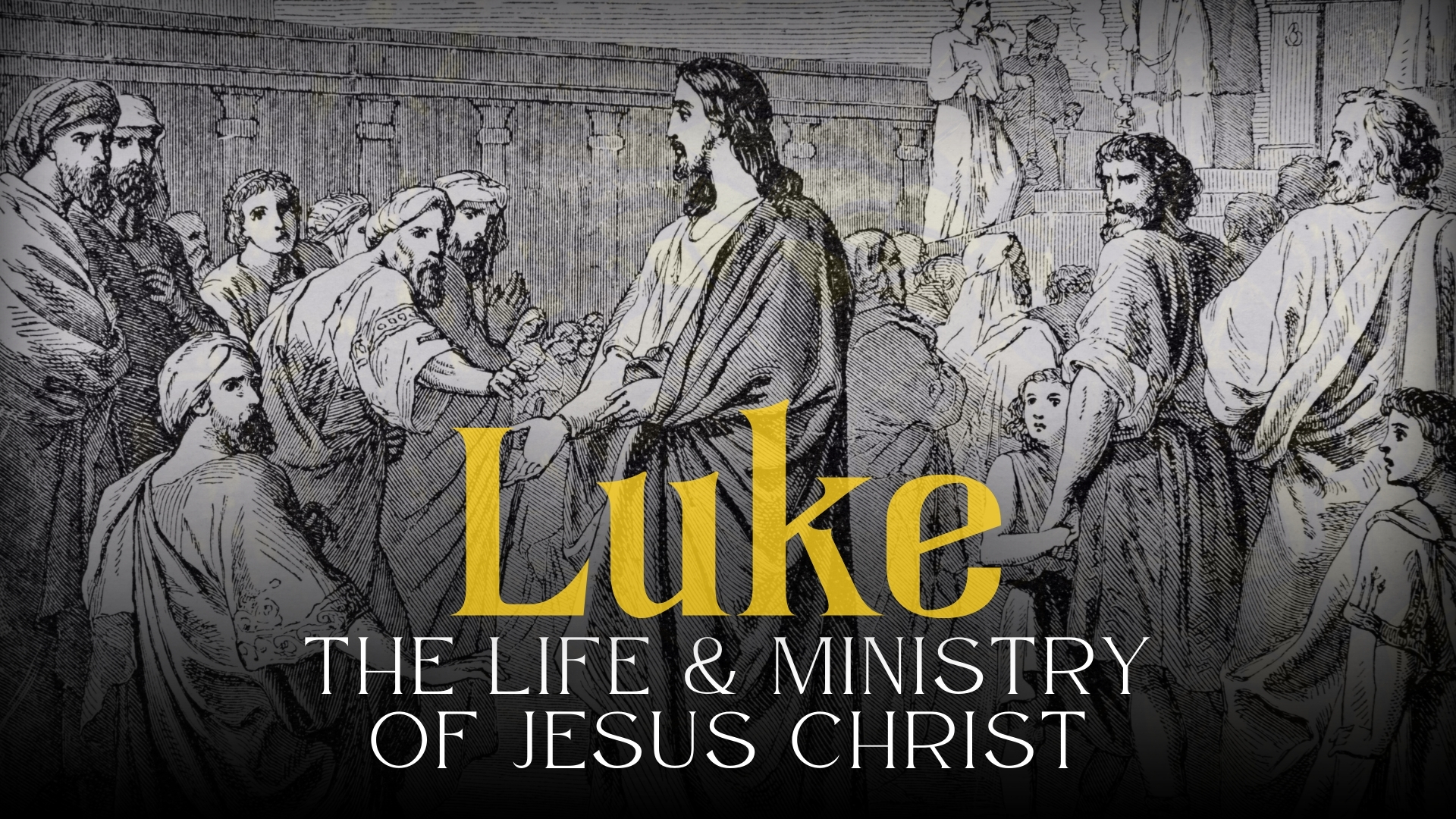
Missing the Kingdom • 10.18.26

Missing the Kingdom
Luke 13:31-14:24
Learning from Jesus’ interactions with the religious leaders
- Jesus will fulfill his mission
- Jesus is faithful to confront and instruct
- God’s kingdom banquet will happen, and the participants will surprise you
Manuscript:
Good morning, church family! Introduce self + welcome guests
Dismiss 4th + 5th graders
Ushers + Bibles (Luke 13; page 1038)
Today we pick right back up where Pastor Jack left off last week. Jesus is on his way through towns and villages, teaching and journeying towards Jerusalem. He has just taught them about the narrow door and warned about the dangers of waiting until it is too late to repent and be saved. I really appreciated Jack’s warning last week that it is not enough to be Jesus adjacent – around the things of Christ but not truly submitting our lives to him in faith and repentance. This is what Jesus is repeatedly making clear to the people of his day. It will not do to trust in your religious activity, your intellectual assent to the things of God, or in your proximity to Jesus. If you are going to be reclining at the table in the kingdom of God, then you must enter through the narrow door, which is faith in Jesus Christ.
We are studying another lengthy portion of text today, wherein Jesus interacts quite a bit with the religious leaders. The way that he responds to these men and their behavior becomes our learning opportunity. That is our aim today:
Learning from Jesus’ interactions with the religious leaders
It is to your benefit if you pay attention to what these men are doing and then learn from how Jesus responds to them. With that in mind, let’s turn our attention to the passage for today. This first part takes place on the exact same day as the warning to enter through the narrow door that we heard about last week.
Luke 13:31–35 (ESV)
31 At that very hour some Pharisees came and said to him, “Get away from here, for Herod wants to kill you.” 32 And he said to them, “Go and tell that fox, ‘Behold, I cast out demons and perform cures today and tomorrow, and the third day I finish my course. 33 Nevertheless, I must go on my way today and tomorrow and the day following, for it cannot be that a prophet should perish away from Jerusalem.’ 34 O Jerusalem, Jerusalem, the city that kills the prophets and stones those who are sent to it! How often would I have gathered your children together as a hen gathers her brood under her wings, and you were not willing! 35 Behold, your house is forsaken. And I tell you, you will not see me until you say, ‘Blessed is he who comes in the name of the Lord!’ ”
What an incredible interaction between Jesus and these men! We are not told the motives of the Pharisees in coming to Jesus. Commentators are divided about it as well. Perhaps the Pharisees were truly seeking to help Jesus by warning him. I am doubtful about that view as it seems to contradict the current mood of the Pharisees towards Jesus. We have seen in previous chapters that their hostility towards Jesus is increasing. To me it seems more likely that they are trying to get rid of him through fear. However, whatever their motive might be, Jesus is not swayed by their warning. He refuses to be cowed by the threat of physical harm. He commands them to tell Herod that he is on a mission, and he will not deviate from it until it is accomplished. He even calls Herod a fox, indicating that he views Herod as a sly, manipulative pest who is actively opposing the plan of God. Foxes were known for their cunning yet also portrayed as pests who ruined vineyards. Remember that Herod had beheaded John the Baptist not long ago. Jesus is well aware that Herod opposes the prophets of God and kingdom of God, yet he is not afraid of him. He will not be dissuaded from accomplishing the mission he and the Father had planned! This is our first lesson for this morning…
- Jesus will fulfill his mission
And what is his mission? He is the Son of God who has been sent to bring in the kingdom of God by calling the people of God to enter his kingdom through faith and repentance. (repeat) He is the culmination of a long line of prophets who have come before him crying out to repent and believe!
And like many of the prophets before him, he must end his journey in Jerusalem, the city that frequently killed the very messengers of God who had been sent to it! Consider this… Jesus knew that he was going to his death, yet he marched onwards. Nothing would keep him from obeying his Father’s will.
And as he declares this, he then moves into a lament over the spiritual condition of Jerusalem. Jesus longed to show great compassion and mercy to them, like a brooding hen protecting her young, yet they were unwilling! Throughout his life and ministry, he has been rejected by his own nation. And he knows the hearts of men. He knew that he would be the Suffering Servant, the rejected Savior and King that Isaiah had foretold hundreds of years earlier.
As we read in verse 35, those who reject him will pay a great price for it. The Lord is patient, but his patience will not last forever. We heard about this last week with the warning about the narrow door and waiting too long to believe in Christ. Now we hear from Jesus’ own mouth a judgment upon the people of Israel – “Behold, your house is forsaken. And I tell you, you will not see me until you say, ‘Blessed is he who comes in the name of the Lord!’”
Jesus pronounces judgment upon the nation. Their house will be desolate, under judgment, far from God. The phrase “is forsaken” functions as a divine passive, meaning that God is vacating Jerusalem, withdrawing his presence. They will remain under this sentence until the day when they are willing to acknowledge Jesus in worship and faith. When will that be?
My understanding of God’s grand redemption plan is that this will take place at a future point when God convicts the Jewish people of their need for Christ. This quote of blessing the one who comes in the name of the Lord is from Psalm 118:26, which is spoken in a positive rather than forced manner. So, it doesn’t seem to fit that this is speaking of their submission at judgment day. Instead, this seems to fit into what Paul speaks about in his letter to the Romans, especially chapters 9-11. There will be a future ingrafting of many Jews into the people of God. To add to this, Jesus also speaks about this stage of redemptive history being “the time of the Gentiles” in Luke 21:24. All of this to say, Jesus is faithful to fulfill his mission to rescue and redeem both Jews and Gentiles into the one people of God, and nothing will stop him! You can and ought to have great faith in Jesus fulfilling his mission! He fulfilled it on earth through his death, burial, and resurrection, and he will come again to finish what he started on the end of time.
Now the immediate context is a word of warning and judgment. And what follows is a series of confrontational interactions with the religious leaders. Let’s turn our attention to this next section which runs from 14:1-24. We’ll start by reading 1-14.
Luke 14:1–14 (ESV)
One Sabbath, when he went to dine at the house of a ruler of the Pharisees, they were watching him carefully. 2 And behold, there was a man before him who had dropsy. 3 And Jesus responded to the lawyers and Pharisees, saying, “Is it lawful to heal on the Sabbath, or not?” 4 But they remained silent. Then he took him and healed him and sent him away. 5 And he said to them, “Which of you, having a son or an ox that has fallen into a well on a Sabbath day, will not immediately pull him out?” 6 And they could not reply to these things.
7 Now he told a parable to those who were invited, when he noticed how they chose the places of honor, saying to them, 8 “When you are invited by someone to a wedding feast, do not sit down in a place of honor, lest someone more distinguished than you be invited by him, 9 and he who invited you both will come and say to you, ‘Give your place to this person,’ and then you will begin with shame to take the lowest place. 10 But when you are invited, go and sit in the lowest place, so that when your host comes he may say to you, ‘Friend, move up higher.’ Then you will be honored in the presence of all who sit at table with you. 11 For everyone who exalts himself will be humbled, and he who humbles himself will be exalted.”
12 He said also to the man who had invited him, “When you give a dinner or a banquet, do not invite your friends or your brothers or your relatives or rich neighbors, lest they also invite you in return and you be repaid. 13 But when you give a feast, invite the poor, the crippled, the lame, the blind, 14 and you will be blessed, because they cannot repay you. For you will be repaid at the resurrection of the just.”
The scene has shifted to a Sabbath day where Jesus is once again dining with the Pharisees. This is the last time he will do so, and as we just heard, he is again faithful to confront and instruct them through multiple interactions during this dinner party. Which leads to our second lesson…
- Jesus is faithful to confront and instruct
It begins in verses 1-6, where we see Jesus confront their self-righteousness in failing to show compassion on the Sabbath. As Luke writes it, it seems that the Pharisees had intentionally set up a scenario to test Jesus. We are told they were watching him carefully. And that they had invited a man with dropsy (edema – swelling of the body due to excess fluids). Now notice in verse 3 that Jesus was responding to the lawyers and Pharisees, yet we have no record of them saying anything to him. It seems he is once again responding to the internal thoughts of their hearts. And he poses a question that gets at an issue we’ve heard before – what is lawful on the Sabbath? Is healing lawful or not?
How do they respond? With silence! They are unwilling to look bad by denying compassion and mercy on the Sabbath, but they are also unwilling to give approval to what they know Jesus is about to do.
What does Jesus do? He demonstrates what is lawful/right. He heals the man. He shows mercy and compassion on the Sabbath. And then poses another question to them about whether they would help their son or ox if it needed them on the Sabbath. He knows the answer – of course they would. But, once again, they respond with silence. The way Luke writes it is, “They could not reply to these things.” They were stuck because of their hypocrisy! Their position was a shameful one that had been exposed.
Rather than holding to a posture of self-righteous legalism that leads to a lack of mercy and compassion, God’s kingdom people are to be eager to show compassion and mercy. Jesus models moving towards those who are in need, not away from them. This is true worship, including on the Sabbath. Jesus continues to challenge the teaching of these religious leaders and reveal the true priorities of God’s kingdom. It is much different than the meticulous rule-keeping that they had made it out to be.
I’d like to ask you to evaluate your own life for a moment. Are there ways that you justify a lack of compassion for those in need? (repeat)
I understand that we are not Jesus and we do not have the power to heal those with medical conditions. However, if God is calling his kingdom people to be kind and compassionate rather than legalistic rule-keepers, then how might that apply in our day? I think it could apply when we experience an unwillingness to help those who are “different” than us. Those from a different religion that we don’t agree with. Those who hold a different political view than us. Those who are stuck in sin and don’t seem to want to change. When you encounter such people, what is your response? Do you think about Christ moving towards you when you were in need? Do you move towards them in compassion – seeking to meet their physical and spiritual needs? Or do you turn from them and perhaps think poorly of them?
*pause* Isn’t Jesus’ example convicting?
After silencing the leaders in this way, Jesus proceeds to tell a parable to the rest of the dinner guests. He is moved to speak after watching so many of them arrive and choose the seats of greatest honor for themselves. In verses 7-11, Jesus instructs them in a way that calls out their pride and reveals that humility is to be preferred over self-exaltation. Now, remember, these confrontations and instruction are coming at a time when Jesus is revealing kingdom priorities. This is about more than instruction on how to conduct yourself at a dinner party on earth, but about the kind of character you cultivate and how to prepare yourself for the banquet of the King of Kings.
In this section, Jesus warns them that if they operate by pride and presume to be worthy of the most important seats, they are in danger of being humiliated when the host asks them to move for a more important guest. However, one who has a humble heart, taking the lowest place in the room, puts himself in a position to be honored by the host. He connects this to a principle of the kingdom of God in verse 11 – “For everyone who exalts himself will be humbled, and he who humbles himself will be exalted.” This is how God’s kingdom works. It is foolish to pursue self-exaltation, when that will really end in humiliation. Far better to operate out of humility – having a right view of self in light of a right view of God – and allow God to bless you through exaltation. Humility exalts God and others, not self! Jesus is highlighting an important characteristic of his kingdom people – HUMILITY not PRIDE.
He drives this home further in verses 12-14 when he addresses the host of the party, telling him not to invite his friends or family or the rich. Why? Because the focus in God’s kingdom is not some sort of tit-for-tat mutual benefit society. No! Jesus tells the host to invite the poor, the crippled, the lame, and the blind – the outcasts and downtrodden of society – because in so doing there is an eternal blessing! They cannot repay you in this life, but God will bless you in the resurrection. A person who lives this way, not focused on cultivating a comfortable, easy life where they pass their days hanging out with their closest companions or the upper class of society, but rather are intentional to use their wealth to bless others is operating from a humble heart. They will receive God’s eternal blessing when they enter his kingdom.
Think about how counter-cultural this is in our day. It would have been in theirs too. Isn’t it sad that we find this instruction so offensive? Who here is planning to host a dinner party with the people in these categories? I’m willing to bet the answer is – very few of us. This is sobering teaching. It confronts us in our complacency. Throughout the ages, people have been far too concerned with social status and desiring to interact with people from similar groups or those who will increase their status. This is worldly wisdom – using one another for personal gain or comfort.
Jesus reveals that, in God’s kingdom, there is no consideration of social status and there ought to be a flow of resources from those who have more to those who have less. Because that is what Jesus has done for us! While we were yet sinners, he saved us. He poured out on us the riches of his mercy and grace.
So, we ought to be compassionate and move towards those in need. They are our fellow image-bearer of God! To me, this seems to be such an excellent example of Jesus’ earlier teaching:
Luke 12:32–34 (ESV)
32 “Fear not, little flock, for it is your Father’s good pleasure to give you the kingdom. 33 Sell your possessions, and give to the needy. Provide yourselves with moneybags that do not grow old, with a treasure in the heavens that does not fail, where no thief approaches and no moth destroys. 34 For where your treasure is, there will your heart be also.
Wouldn’t you rather be generous with what you have been given in this life and enjoy the blessings of God in his eternal kingdom? What is it that keeps you from interacting with those who can offer you nothing in return? Perhaps you have a neighbor or co-worker or friend (or fellow church-goer) who would be deeply blessed by your compassion and generosity. What would it look like this week for you to come alongside them in a meaningful way? Using the resources God has entrusted to you to bless them and expect nothing in return?
This is also an appropriate time for me to mention that we have many ministry partners in the Des Moines metro that provide opportunities to live this out. These may not result in a meal in your home, but they will have you meeting tangible needs in people’s lives.
(Ministry Partner webpage x2 – 10s auto-timers – ends by going back to main points!)
- Agape Resource Center
- Garden Gate Ranch
- Grimes Storehouse
- Wildwood Hills Ranch
- Freedom for Youth
- Ruth Harbor
- Joppa
- Together for Good
- GVSS
- Single Parent Provision
- Blessing Bags
- Christmas Dinner
*pause*
Are you thankful for Jesus’ confrontation and instruction? He is a faithful Savior! He will not leave us alone in our pride but invites us to recognize it and turn to him in humility.
Unfortunately, the guests at this dinner party didn’t quite get the memo. Listen to what happens next:
Luke 14:15–24 (ESV)
15 When one of those who reclined at table with him heard these things, he said to him, “Blessed is everyone who will eat bread in the kingdom of God!” 16 But he said to him, “A man once gave a great banquet and invited many. 17 And at the time for the banquet he sent his servant to say to those who had been invited, ‘Come, for everything is now ready.’ 18 But they all alike began to make excuses. The first said to him, ‘I have bought a field, and I must go out and see it. Please have me excused.’ 19 And another said, ‘I have bought five yoke of oxen, and I go to examine them. Please have me excused.’ 20 And another said, ‘I have married a wife, and therefore I cannot come.’ 21 So the servant came and reported these things to his master. Then the master of the house became angry and said to his servant, ‘Go out quickly to the streets and lanes of the city, and bring in the poor and crippled and blind and lame.’ 22 And the servant said, ‘Sir, what you commanded has been done, and still there is room.’ 23 And the master said to the servant, ‘Go out to the highways and hedges and compel people to come in, that my house may be filled. 24 For I tell you, none of those men who were invited shall taste my banquet.’ ”
Apparently, after hearing Jesus mention the resurrection of the just, one dinner guest blurted out in excited anticipation about eating bread in the kingdom of God. This man appears to presume that they will be present for this blessed celebration in God’s kingdom. So, Jesus responds with another parable to help them grasp the dire situation they are in.
In this parable, a man who was giving a great banquet sent out invitations in advance. When the time came for the feast, he sent his servant to follow-up with those invited. The time had come, the feast was ready, and they could enjoy it with him! Yet, shockingly, they all began to make excuses! One prioritizes inspecting a field he purchased over attending. Another prioritizes inspecting 5 yoke of oxen, which indicates he was a wealthy landowner. Both ask to be excused. The third says, “I’ve just married, I can’t come.” He doesn’t even ask to be excused. He just says he’s got other priorities. Here’s the problem, none of these should have precluded them from attending the feast! The inspections could have taken place at other times; these men had already purchased the field/oxen. There was no rush to see them now! They’re already yours! And for the man recently married, that did not mean he could not attend a banquet for an evening. His time away from his wife would have been minimal!
Please understand these are not valid excuses! They expose men who are prioritizing other things in life, thus they refuse to come to the banquet. When you step back and consider the larger context and message behind the parable, these men are prioritizing worldly pursuits over God’s kingdom. Jesus is warning of the dangers of having the wrong priorities to the people at this dinner party.
They should not assume they will be present to eat bread in the kingdom of God for they have refused the invitations that God has presented through the prophets and, most recently, through Jesus! As we heard in the progression of the parable, their refusal to come invited the master’s wrath, culminating in the declaration in verse 24 that “none of those men who were invited shall taste my banquet.”
It is folly to presume that you will be in the kingdom of God if you have rejected God’s messengers, especially His Son! No amount of religious activity and Jesus-adjacency will get you through the narrow door and into the kingdom of God! It is by faith alone in Christ alone.
Now, does this mean that none will be at the kingdom banquet? Will it be cancelled since those originally invited refused to come? By no means! As we heard in Jesus’ teaching…
- God’s kingdom banquet will happen, and the participants will surprise you
When the master heard the rejections from the original invitations, he immediately sent his servant out to the streets and lanes of the city to bring in the poor and crippled and blind and lame. The very people Jesus had spoken about earlier to the host of his dinner party. God models seeking out the least of these to invite them to his kingdom banquet!
Yet, even after the servant fulfills his master’s request, we hear that there is still more room! God’s kingdom banquet is expansive, and God desires his house to be filled. He sends the servant back out again to urgently call (compel) people from the highways and hedges to join the feast. In the imagery of this parable, such people would have been shocked and suspicious that a person of such wealthy standing would want them at his banquet in his home.
What a beautiful picture of the Gospel message! The message of salvation and the invitation to delight in the banquet of the kingdom of God is extended to weak and weary sinners like you and me. Men and women who had no right to be a part of God’s people or invited to his banquet/kingdom. Rebels against a HOLY God. Yet he calls and urgently implores us to come and partake through faith in Christ!
Our appropriate response is to heed this invitation to Jesus’ wedding feast before it is too late. Come through the narrow door before it is closed! Believe in Christ, turn from your sin, and be saved!
Do not repeat the folly of the religious leaders of Jesus’ day by rejecting this invitation. Heed the warning that there are many distractions in this life from entering the kingdom of God. These remind us of the parable of the soils that we heard about earlier in Luke. Many cares and concerns of this life can prevent us from prioritizing God and his kingdom.
What are the areas of your life that tend to crowd out your pursuit of God and his kingdom? It’s not wrong to have possessions or obligations to family in this life, but do not let anything keep you from your first priority and love – your God. When you prioritize pursuing Him, then these other commitments will be put into their proper place, and you will learn to handle them in a godly manner. Make sure you are seated at the banquet by cultivating a life of humble faith and repentance!
Then I would also invite you to consider who you can invite to join you at God’s kingdom banquet! He has made it clear that he intends for his house to be full. Who has God put in your sphere of influence to evangelize and minister to? Don’t be afraid to urgently implore them to evaluate the claims of Christ and come into God’s kingdom. (5-3-1 card)
In fact, next week’s sermon is going to be on the cost of following Christ and the joy in heaven over one sinner who repents. What a great opportunity to invite someone to come and hear these marvelous truths! Not to mention that in November we will be entering into what we affectionately know as Stewardship Month. This is a time of year where we consider all that God has entrusted to us and seek to be faithful stewards/managers of it. This year our sermon series is called What Rules You? and it is focused on stewarding your heart. Over the course of November, we are going to develop a theology of our inner-man/inner-woman to better understand why we do what we do. Each Sunday we’ll approach this from a different common ruling desire or attitude of the heart: anxiety, despair, folly, and anger. I hope you’ll prioritize being present for these and invite a friend to come and learn too! God’s Word has real and practical answers for these life-dominating heart issues. We are also planning our annual Stewardship Celebration for Sunday, 11/22 at 5pm. If you’ve never been before, you don’t want to miss out. It’s an opportunity for the whole church family to come together for a nice catered meal, fellowship, and then worship and testimonies together. Mark it down on your calendars and plan to be there!
I’m looking forward to how God continues to use His Word to call His people to Himself. And to refine us in the process to be holy as He is holy! What a privilege and joy it is to pursue Him alongside you.
Let’s pray.
Pray